Cryogenic Era in Szeged: Storing the Discoveries of the Future at -150 °C
Until now, samples were stored at -80°C. While this established practice provided a stable foundation, cryogenic storage at -150°C or below - using a liquid nitrogen-based cooling medium - opens up a new time horizon: it can preserve the structural and molecular state of biological samples, including human blood plasma, over decades.
\r\n\r\n
With this development, the storage time of plasma samples used in research is significantly extended. This is not only a technological advancement, but a matter of research security: greater long-term comparability, more stable data quality, and increased scientific responsibility.
\r\n\r\n
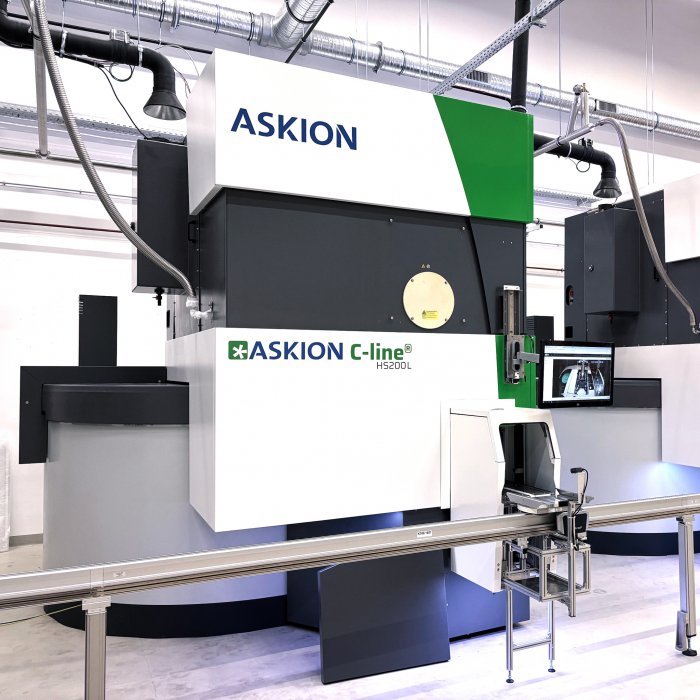
One of the system’s key features is that it minimizes the temperature difference between storage and sample handling. The Askion units are connected via a rail system to a temperature-controlled workstation. Sample picking, retrieving samples, and storage of the samples are fully automated, performed by robotic arms in a closed and controlled environment.
\r\n\r\n
Another major advantage of the automated cryogenic system is its capacity: it can store up to one million sample tubes. The freezer units are being delivered in multiple phases, with the first installation completed in December.
\r\n\r\n
Within the long-term vision of the Frontiers Foundation, the development of CMF Biobank is not merely an infrastructure expansion, but an important milestone - ensuring that our biological samples will be available to future researchers and diagnostic procedures.