From discovery to therapy: working at full capacity to restore vision
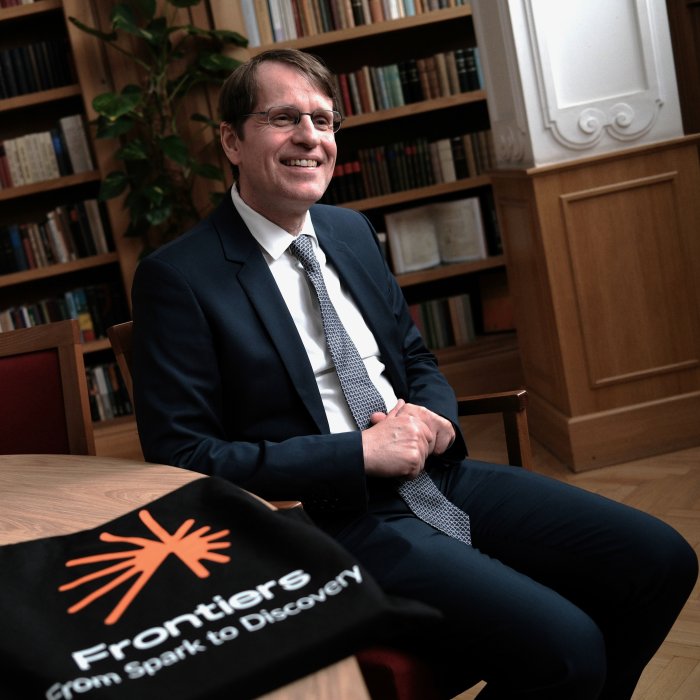
As the first top-level researcher to join the Frontiers Fellow community, Botond Roska shared his perspectives on the new Hungarian knowledge center and his scientific achievements. The Wolf Prize-winning researcher believes that science is more than a job. It is a full-time way of life that requires long-term dedication.
The path from scientific discovery to therapy often takes decades. According to Roska Botond, the most important element on this journey is strict focus. You must work backwards from the disease to the technology, and you must never lose sight of the goal. In medicine, it is common to look for applications for an existing technology, while other times a specific disease inspires the creation of a new solution. He explained that the greatest reward of a research career is when a discovery reaches patients in the form of therapy. One of his most defining moments was learning that the first blind patient treated with the technology developed by his team had begun to show visual responses.
The mission of the Frontiers Fellow community is to connect talented young scientists with researchers at the peak of their careers. This matters deeply in the world of science, where research is ultimately about people. Botond Roska’s involvement marks the beginning of a long-term development. For him, nurturing talent does not mean micromanagement. It means giving the next generation access to opportunities and cutting-edge technology. Future researchers should not be taught in the traditional sense. Instead, they should be given problems that no one has solved before.
Another key goal of the program is to build a modern research ecosystem where basic science, technological innovation, and clinical applications operate within a single effective system.
You can watch the video of the conversation here: https://www.youtube.com/watch?v=FERBz5muhEo
Photo credit: Géza Marossy